Gamifying
Sustainability
A habit-tracking app designed and tested as my capstone project
Why do sustainable habits rarely stick?
Most people who want to live more sustainably already know what they should be doing. The main issue is that habits rarely stick. The habit-tracking apps I looked at were passive: log your habits, see a number go up. No feedback loop, no pull to come back tomorrow.
This project asked a specific question: can gamification facilitate habit formation? Not just make the app more fun, but meaningfully improve engagement and long-term habit adherence.
Utilizing game elements in non-game contexts to drive user engagement and motivation.
Traditional habit-tracking struggles with long-term adherence due to a lack of engagement. (Nguyen, 2020)
Three lenses: features, habits, and experience
Before designing anything, I scoped the research around three core questions: what gamification features actually drive engagement, how habit-tracking mechanisms support sustainable behaviour, and what UX principles would make the app genuinely easy and pleasant to use.
Three phases, start to finish
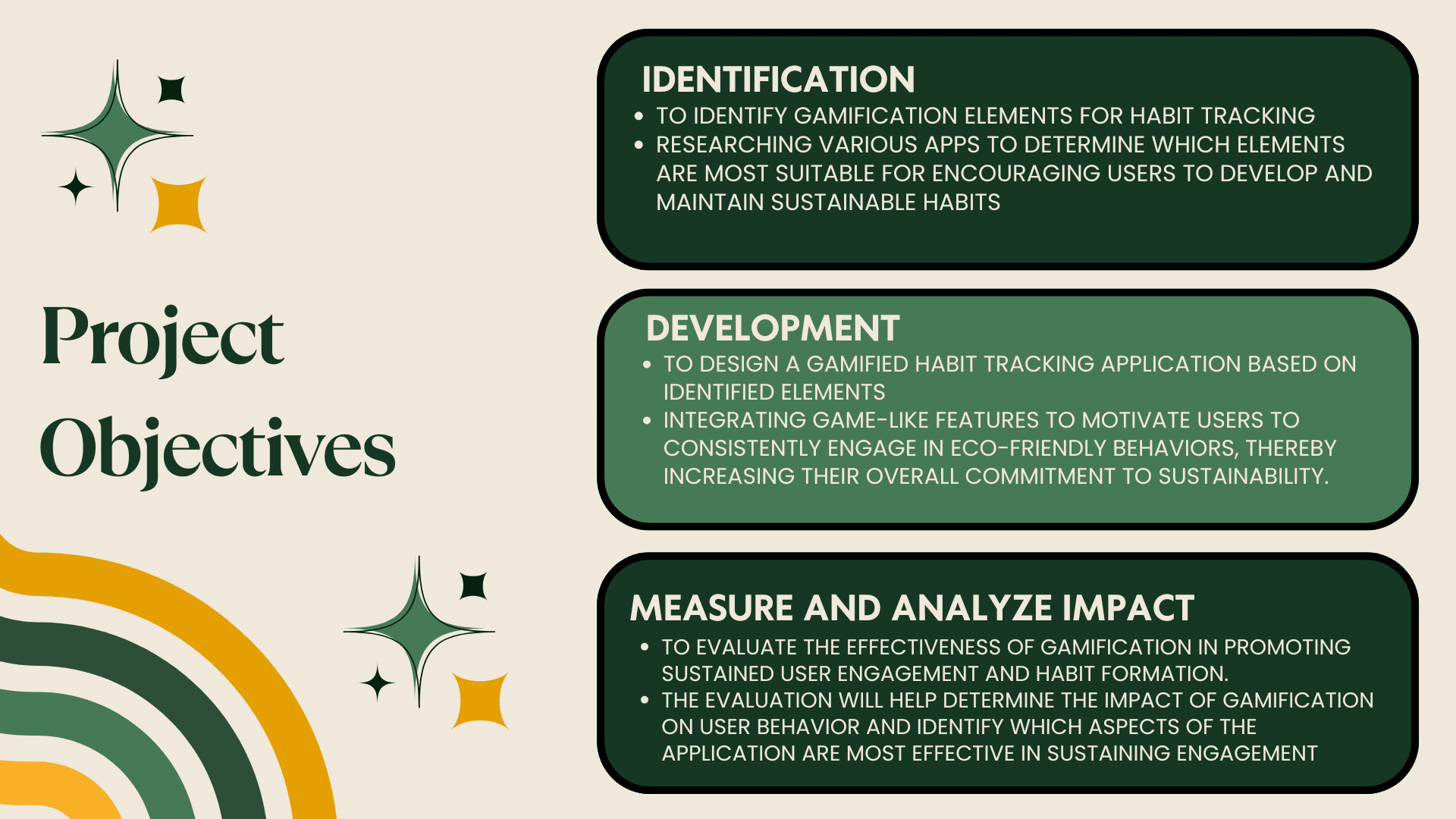
The project ran in three phases: first understand what the research already knew about gamification and habit tracking, then design and prototype Grabits based on those foundations, then test it with real users and refine.
Analyse & Plan
Reviewed academic papers and existing apps related to gamification and habit tracking to identify gaps and define the scope of the study.
Design & Develop
Designed a user-friendly habit-tracking app incorporating gamification elements, selected the most motivating features, and built working prototypes.
Evaluate
Assessed ease of use and overall experience, identified areas for improvement, and refined the application based on real user feedback and data.
What the literature showed me
The literature pointed clearly at which gamification elements actually work and which conditions make them fall flat (limited resources, time constraints). A preliminary survey with early users backed this up: badges, and social features rated highest for engagement.
Rewards, Points, Badges, Vouchers, Tangible Rewards, Leaderboards, Challenges, and Avatars.
Yoshida-Montezuma, Ahmed & Ezezika, 2020Rewards, Metrics for User Comparisons, Limited Resources, and Time Constraints.
Rankainen, 2023Badges, Leaderboards, and Scores.
Aguilar-Castillo, Rejandro-Tell & Perez-Jimenez, 2023Points, Badges, Achievements, Leaderboards, Competition, Cooperation, and Intrinsic motivation.
Lindgren, 2020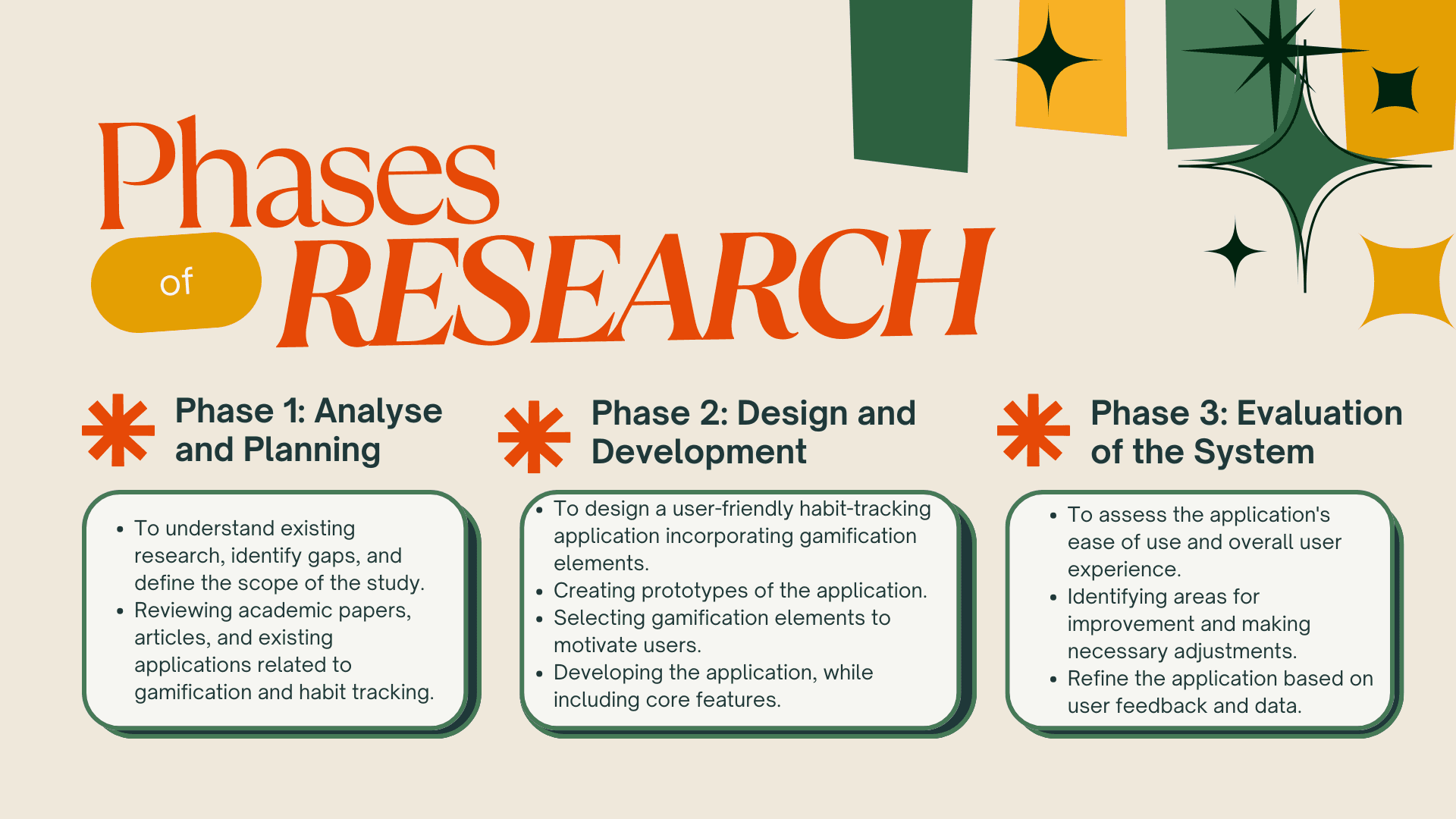
Meet Grabits!
The first version of Grabits focused on getting the core habit-tracking loop right: a daily checklist of sustainable habits across categories, an overall progress view, and an early badge system to reward consistency. The interface was evaluated against Nielsen's usability heuristics, particularly visibility of system status, aesthetic and minimalist design, and help & documentation.
A small, focused test revealed big opportunities
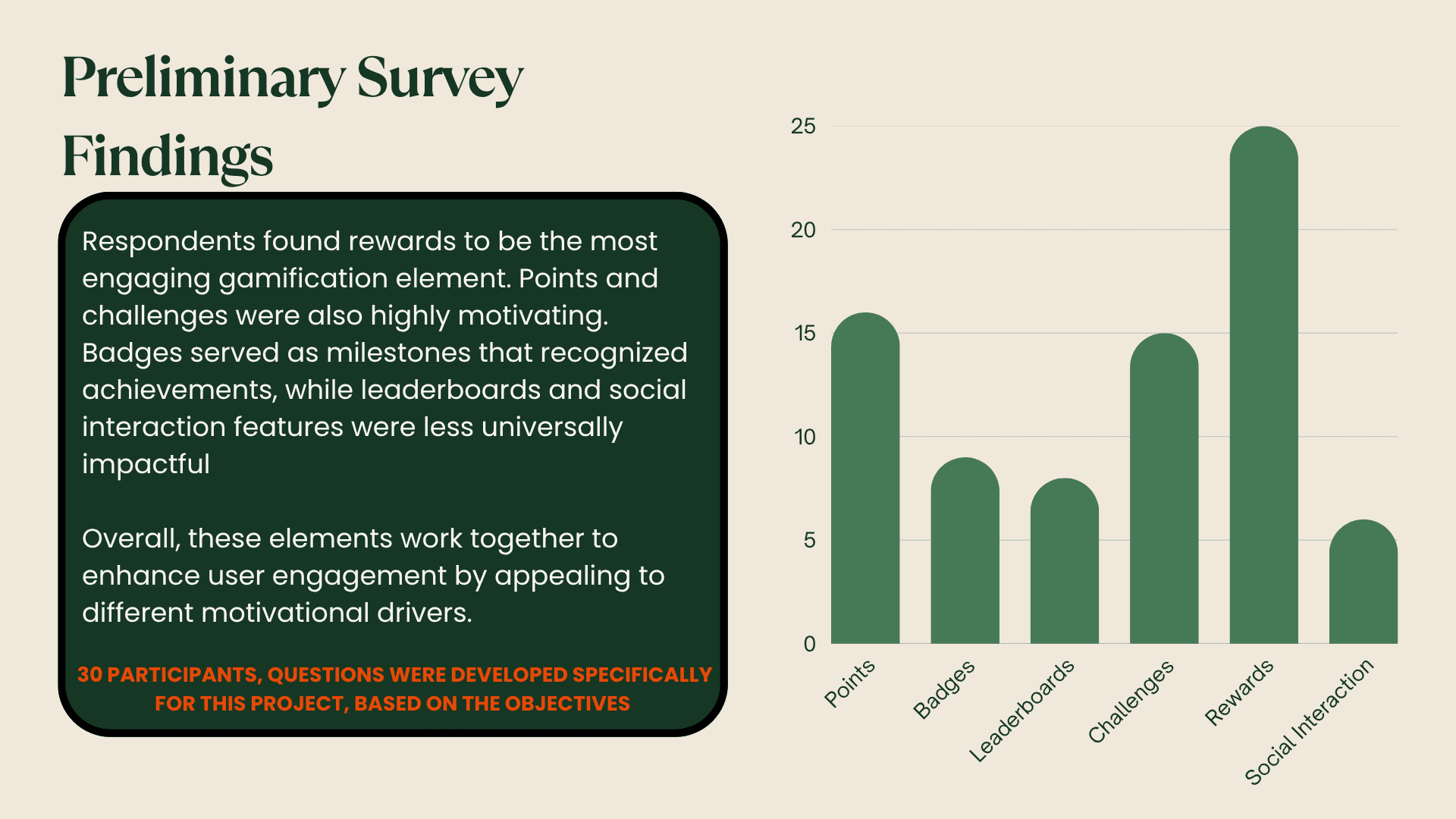
The first iteration was tested with 10 UIUX students at Sunway University using the System Usability Scale. Overall satisfaction was high, but two gaps stood out clearly enough to drive the second iteration.
What people liked
- Design and interface
- Users felt the minimalist style was user-friendly
- Overall satisfaction was high, but room to improve
What needed work
- Forgot password functionality was missing
- Areas for improvement in functionality and engagement
Closing the gaps, raising the stakes
Based directly on usability test feedback, the second iteration added a "forgot password" flow, redesigned the home page to better meet usability heuristics, and introduced two new gamification mechanics: a daily streak tracker and a social sharing feature to push engagement further.
The final verdict
The final version was evaluated with 30 participants using the User Engagement Scale (UES). The numbers confirmed the hypothesis!
30 participants · evaluated using the User Engagement Scale (UES)